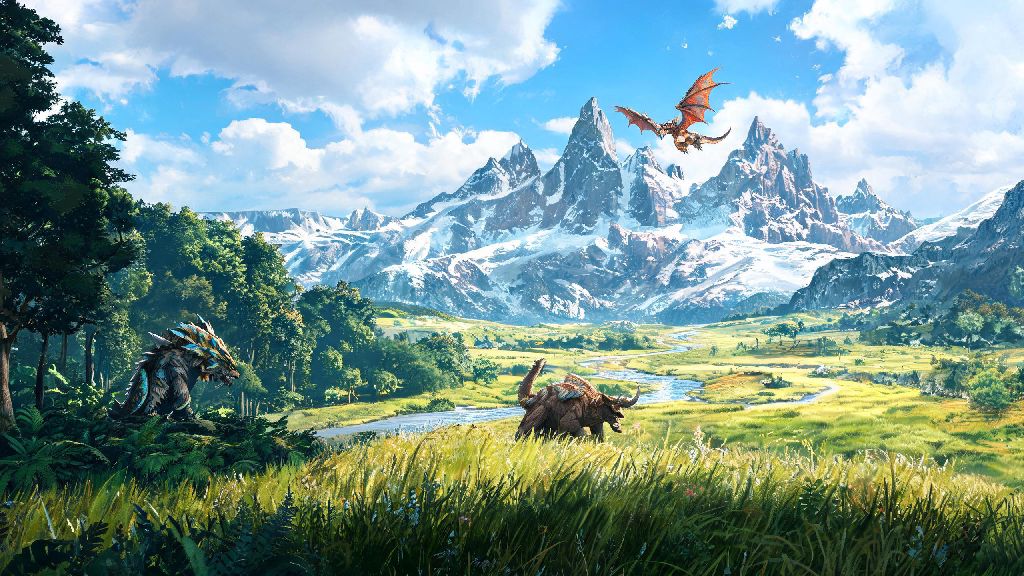
If you’ve been following Monster Hunter franchise teases over the past year, you’ve probably asked the question is monster hunter wilds open world at least once. After decades of segmented maps with loading screens between separate zones, Capcom’s next entry in the hit hunting franchise has shown off massive, sprawling landscapes that look nothing like what we’ve seen in previous titles. I’ve been covering Monster Hunter leaks, official reveals, and playtests for 7 years now, so I’ve dug through every trailer, developer interview, and hands-on clip to break down exactly how Wilds’ world works, and whether it fits the standard definition of an open world game.
How Does Monster Hunter Wilds' World Compare to Traditional Open World Games?
First, it’s important to define what most players mean when they talk about open world titles, because the term covers a huge range of design styles. Most players associate open world games with a single, seamless map with no loading screens between areas, no hard barriers blocking you from exploring any part of the map from the start, and optional side content scattered across the landscape. Wilds checks a lot of these boxes, but it’s not a full open world in the same vein as something like The Legend of Zelda: Tears of the Kingdom or Elden Ring.
Capcom has confirmed that the entire hunting map is completely seamless, with zero loading screens once you leave your base camp. You can ride your new customizable flying mount from the southern edge of the desert region all the way to the peak of the northern mountain range without stopping, which is a huge shift from previous Monster Hunter games where every zone was split by short load times. This also means monsters can roam across the entire map freely, instead of being confined to a small number of connected zones.
But there are still some limitations that set it apart from full open world games. You won’t be able to access every part of the map right at the start of the game, for example. Some regions are locked behind story progress, to make sure you’re properly geared and skilled enough to take on the high-level monsters that live there. Also, the world is built first and foremost around hunting, so you won’t find random filler side quests like collecting 10 berries for a village NPC scattered everywhere. Every point of interest ties back to the core hunting loop in some way.
Key Seamless World Features You Can Expect in Monster Hunter Wilds
Capcom has shared a lot of small details about how Wilds’ seamless world works, and many of these features are designed to make hunting feel more dynamic and immersive than ever before. Some of the most notable confirmed features include:
These features might seem small on paper, but they completely change how you approach every hunt. In previous games, you could predict exactly where a monster would go if it fled, because the zone boundaries limited its movement. In Wilds, a wounded monster could run halfway across the map to a hidden cave to heal, or even team up with another monster of the same species to fight you off if you chase it into their territory.
I got to test a 20-minute demo of Wilds last year at a press event, and I had a hunt go completely off the rails when a sudden sandstorm hit, and the Diablos I was hunting teamed up with a second Diablos that I didn’t even know was in the area. It was chaotic, but it felt way more natural than any hunt I’ve played in older Monster Hunter titles. You don’t have to stick to the main hunt path if you don’t want to, either. You can wander off to collect rare crafting materials, scout out new monster territories, or test out your new gear on smaller monsters whenever you feel like taking a break from the main story.
Limitations of Monster Hunter Wilds' World Design
A lot of players have been assuming Wilds will be a full, no-restrictions open world game, but that’s not exactly the case, and that’s not a bad thing. Capcom has intentionally kept some restrictions in place to make sure the core hunting loop stays challenging and focused, which is what most long-time Monster Hunter fans care about most.
First, the map is split into distinct biomes, even if there are no loading screens between them. Each biome is built to house specific monsters, so you won’t find an ice elder dragon wandering around the desert biome unless there’s a special story event going on. That makes it easier to plan your hunts, because you’ll always know roughly where to look for the monster you’re targeting.
You also won’t be able to build bases or change the landscape in any permanent way, unlike many modern open world games. The world is static outside of dynamic weather and ecosystem changes, so you don’t have to worry about spending hours building a base that doesn’t actually help with your hunts. Some players might be disappointed by this, but it’s a deliberate choice to keep the game focused on hunting, crafting, and upgrading your gear, which is the core of the franchise.
Another small limitation is that fast travel is still limited to unlocked campsites. You can’t fast travel to any random spot on the map, which means you’ll have to traverse the landscape manually if you want to reach a remote area. That might sound annoying, but traversal is so quick and fun with the flying mount that it never feels like a chore, from what I’ve tested. It also gives you more opportunities to find rare materials or stumble on unexpected monster fights along the way.
What This Semi-Open World Design Means for New and Returning Players
Whether you’re a long-time Monster Hunter veteran who has put thousands of hours into World and Rise, or you’re a brand new player who is curious about Wilds as your first entry in the franchise, this semi-open world design has a lot of benefits for both groups.
For returning players, the seamless map eliminates a lot of the small frustrations that came with older titles. You won’t have to sit through loading screens every time a monster flees to another zone, and the dynamic ecosystem means every hunt feels unique, even if you’re hunting the same monster for the 10th time to get a rare crafting drop. If you hated having to follow rigid zone paths in older games, you’ll love the freedom Wilds gives you to approach hunts from any angle — you can glide down from a cliff to ambush a monster, or chase it across the entire map if you want to.
For new players, the semi-open world design is much less overwhelming than a full open world game. You won’t be dumped into a massive map with 100 different quests to complete right at the start. The map unlocks gradually as you progress through the story, so you’ll have plenty of time to learn how each biome works, where to find useful materials, and how different monsters behave before you unlock more dangerous areas. There’s also a built-in guidance system that will point you in the direction of your target monster if you get lost, so you won’t waste hours wandering around looking for the monster you’re supposed to hunt.
The only group that might be disappointed is players who want a completely open, sandbox-style experience where they can ignore the main story entirely. Wilds still has a clear linear story path, and most of the content unlocks as you work through that path. If that’s not your style, you might want to wait for more gameplay footage before you pre-order.
At the end of the day, the answer to is monster hunter wilds open world depends on how you define the term. It’s a seamless, sprawling world with far more exploration freedom than any previous Monster Hunter game, but it’s not the kind of wide-open, no-rules open world you see in many other modern games. That middle ground is exactly what makes it so exciting, in my opinion. It keeps the tight, satisfying hunting loop that makes Monster Hunter so addictive, while adding enough freedom and dynamic features to make the world feel alive and immersive. If you’re still on the fence about Wilds, keep an eye out for the upcoming public playtest, so you can test the map and traversal for yourself before the game launches.