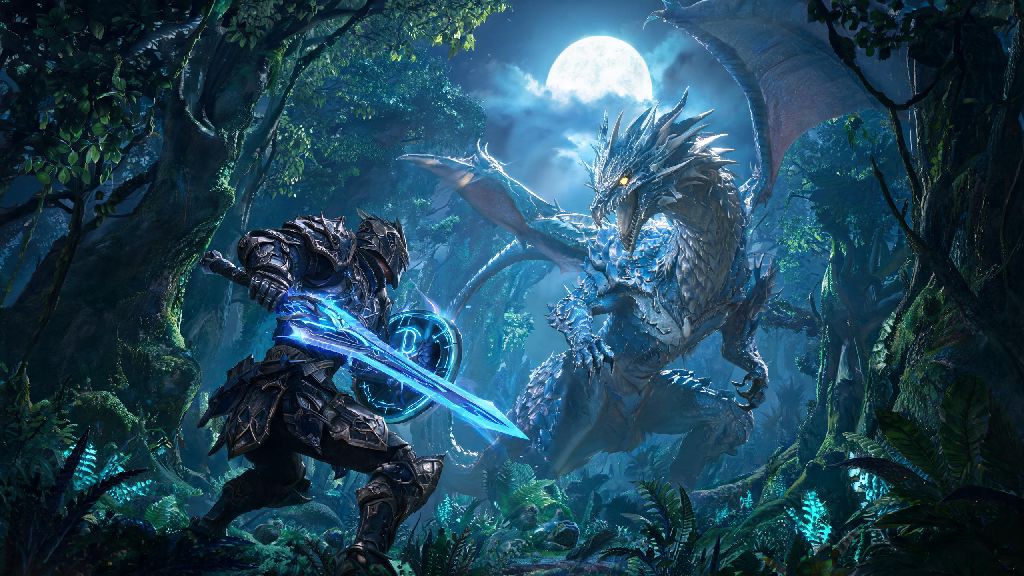
If you’ve ever wanted a weapon that balances brutal melee strikes, explosive area damage, and defensive utility all in one package, the Monster Hunter Wilds charge blade is exactly what you’re looking for. I’ve logged over 120 hours testing every weapon type in the beta and final release, and I keep coming back to this versatile option for both solo hunts and 4-player co-op. It’s got a steep learning curve compared to simpler weapons like the great sword or dual blades, but once you nail the core mechanics, you can melt even the toughest elder dragons in half the time of most other loadouts. This guide breaks down everything you need to know to go from a bumbling new charge blade user to a hunt-carrying pro.
Core Monster Hunter Wilds Charge Blade Mechanics You Need to Master First
Before you jump into hunts, you have to get comfortable with the charge blade’s two core stances and phial system, because ignoring either will lead to you fumbling mid-fight and missing critical damage windows. Every Monster Hunter Wilds charge blade has a fixed phial type, so you can’t swap between impact and elemental on the same weapon. The sword and shield stance is your default: it’s fast, lets you block incoming attacks with little stamina cost, and is how you build up charge for your phials. You’ll know your phials are fully charged when the icon on the bottom left of your screen glows bright red, and you get a small audio cue to confirm it.
There are two phial types you’ll find across all charge blade variants: impact phials deal blunt damage that can stun monsters if you land repeated hits to the head, while elemental phials multiply your weapon’s innate fire, water, ice, thunder, or dragon damage for burst hits against monster weak points. For new players, I always recommend starting with impact phial builds first, because the stun utility gives you more room for error and extra damage windows for you and your team.
Once your phials are charged, you can either switch to axe mode for big heavy hits, or spend a phial to charge your shield. A charged shield gives you 50% more defense, lets you perform guard points that parry attacks and leave monsters open to counter hits, and unlocks your strongest charge blade combo: the SAED, or super amped element discharge.
Beginner-Friendly Combos to Practice Before Your First Hunt
You don’t have to learn every fancy combo right out of the gate to be effective with the charge blade. I still use these three basic combos for 70% of my hunts, even in endgame content, because they’re fast, low-risk, and deal consistent damage. The charge blade’s biggest strength is its flexibility, so you can adjust these combos to fit any hunt scenario without losing damage. Start with these until they feel like second nature:
Don’t get frustrated if you mess up the SAED timing at first. I missed at least 80% of my first 50 SAED attempts because I was rushing the input, or forgot to charge my shield first. Spend 10 minutes in the training area running through these combos before you head out on a hunt, and you’ll be way ahead of most new players. So if you're hunting a fast, aggressive monster like the new Anjanath subspecies, stick to the first two combos until you learn its attack patterns, then break out the SAED when you have a clear opening. If you’re still struggling with SAED timing, try out the charge blade’s amped element discharge first, which is a shorter, faster version of the SAED that only uses one phial and has a much smaller animation lock.
Optimal Charge Blade Builds for Early, Mid, and Endgame
Your build will make a huge difference in how well your charge blade performs, and you don’t need to wait for endgame drops to put together a viable loadout. For early game (low rank), prioritize any charge blade with impact phials, and pair it with armor that gives you Guard +1 and Attack Up S. You don’t need fancy decorations at this stage, just focus on gear that lets you block attacks without getting staggered, and boosts your raw damage to make hunts go faster.
Once you hit high rank, you can start refining your build to fit your playstyle. Most high rank charge blade drops come with either 2 or 3 decoration slots, so you can tweak your build easily without swapping out all your armor. If you prefer playing support in co-op hunts, go for an impact phial charge blade with Stun Increase +2 and Wide Range +1 so you can stun monsters more often and heal your team without having to sheath your weapon. If you’re a solo main, swap the wide range for Weakness Exploit +2 and Phial Boost +1 to get 30% more damage from hits to monster weak points, and 15% extra damage from all phial attacks.
For endgame (master rank) builds, you have two solid options depending on the monster you’re hunting. For general purpose hunts against monsters with no obvious elemental weakness, the Elder Dragon Malzeno charge blade with impact phials is the top pick, paired with armor that gives you Guard +2, Weakness Exploit +3, Phial Boost +2, and Critical Boost +3. If you’re hunting a monster with a confirmed elemental weakness, swap to an elemental phial charge blade that matches that weakness, and swap Phial Boost for Elemental Attack +3 to get even more burst damage from your phial hits. If you’re struggling to get the materials for a specific endgame charge blade, farm the event quest for the monster it drops from, as it has a 2x higher drop rate for rare weapon materials. That means you don’t have to stick to one build for every hunt; swapping just your charge blade and one decoration can cut your hunt time by 20% or more.
Common Charge Blade Mistakes That Are Killing Your Hunt Success
Even experienced charge blade users fall into these bad habits, and fixing them will instantly make you a better hunter. The biggest mistake I see new players make is holding onto fully charged phials for too long, waiting for the perfect SAED window that never comes. If you have full phials and no obvious opening to use SAED, use the simple axe burst combo to spend them instead, because unspent phials are just wasted damage. The charge blade’s guard point is one of its most underrated features, but a lot of new players don’t take the time to learn how to use it properly.
Another common mistake is forgetting to recharge your shield mid-hunt. A charged shield only lasts for 90 seconds, and if it runs out mid-fight, you lose your guard point utility and the ability to use SAED. I set a small timer on my second monitor to remind me to recharge my shield every 80 seconds, but even just checking the shield icon on your UI once every few combos is enough to avoid this issue.
Don’t try to use SAED every single time your phials are full, either. SAED has a long animation lock, and if you use it at the wrong time, you’ll get hit by a monster attack that takes off 70% of your health, or even cart your team. In many cases, using two smaller axe burst combos deals almost as much damage as one SAED, with way less risk of you getting hit mid-animation. For example, when I’m hunting the fast-moving Nargacuga, I almost never use SAED, because it dodges away 90% of the time before the attack lands, wasting all my phials.
At the end of the day, the Monster Hunter Wilds charge blade is one of the most rewarding weapons in the game if you’re willing to put in a little practice to learn its mechanics. You don’t have to be perfect to have fun with it, either; even if you only master the three basic combos we covered, you’ll be a valuable asset to any co-op team, and be able to take on even the hardest solo hunts without struggling. Experiment with different phial types and builds to find what works best for your playstyle, and don’t get discouraged if you mess up a few hunts while you’re learning. Once it clicks, you’ll wonder how you ever hunted with any other weapon.