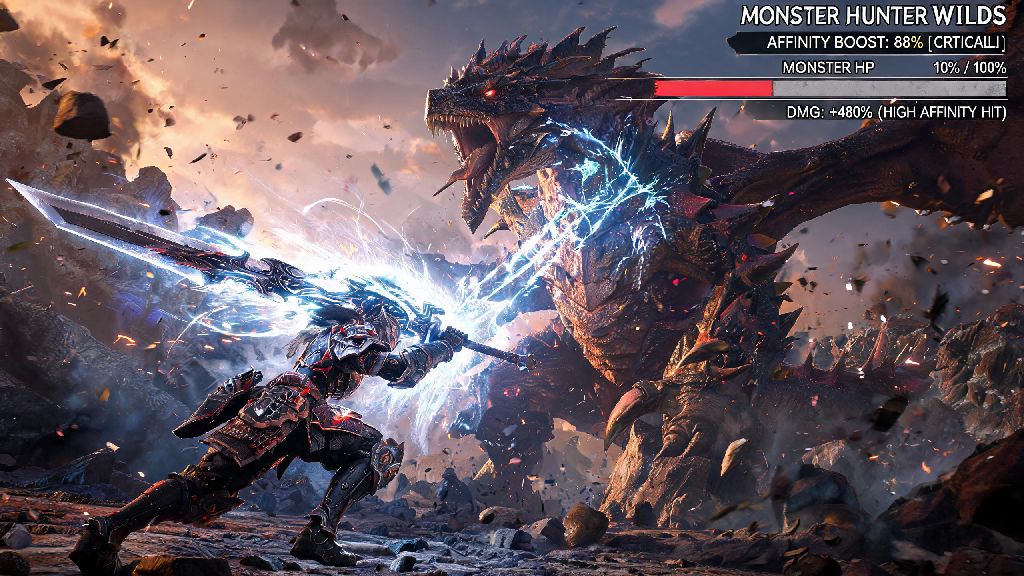
If you’ve ever squinted at your weapon stat screen mid-hunt prep and wondered what is affinity in Monster Hunter Wilds, you’re far from alone. Many new players brush off the small percentage next to their attack stat as a meaningless extra, but it’s actually one of the biggest drivers of your total damage output over the course of a hunt. I’ve spent dozens of hours testing affinity builds across every weapon type, and even a 15% boost to affinity can cut your hunt time for endgame monsters by almost a quarter. We’ll break down exactly how affinity works, hidden mechanics you might miss, and how to build it into your loadout without sacrificing other useful stats.
What is Affinity in Monster Hunter Wilds, Exactly?
First off, affinity is simply your chance to land a critical hit on a monster, but the Wilds devs tweaked the formula slightly from previous entries to make it more consistent for all weapon types. Positive affinity gives you a percentage chance to deal 25% extra raw damage on a hit, while negative affinity gives you that same chance to deal 25% less damage than your base attack stat. Unlike older Monster Hunter games, affinity now applies to both melee and ranged weapon hits equally, no matter if you’re swinging a greatsword or firing a bow.
You’ll see affinity listed as a percentage right next to your base attack value on every weapon, armor set, and decoration that impacts the stat. For example, if you have a 30% affinity rate, roughly 3 out of every 10 hits you land will get that 25% damage boost, which adds up quickly over a 10 or 15 minute hunt against an elder dragon. Many early-game weapons have negative affinity as a tradeoff for higher base attack, so it’s important to weigh that cost before you commit to crafting a new weapon.
How Affinity Interacts With Other Core Damage Stats
A lot of players assume affinity buffs all of your damage, but that’s not the case for Wilds. Affinity only impacts your raw physical damage, so it won’t give you any extra fire, water, or poison damage on hits that proc elemental effects. That means affinity builds are far more effective for raw-focused weapons like greatswords, hammers, and switch axes, while elemental builds get less value from stacking high affinity. I learned this the hard way when I stacked 70% affinity on my fire dual blades build early on, only to find I was dealing less damage than a friend who stacked elemental attack boosts with 0% affinity.
There are a few niche skills that break this rule, though. Critical Element is a mid-game armor skill that lets your affinity crits apply 20% extra elemental damage, making affinity viable for dual blades, bows, and other elemental weapon types if you can fit the skill into your build. You also don’t have to worry about affinity being wasted on hits that bounce off monster armor, either: if your hit connects and doesn’t bounce, it will roll for affinity even if you only deal a small amount of damage.
Easy Ways to Boost Affinity for Every Playstyle
You don’t have to farm endgame decorations or grind for rare armor sets to get a solid affinity boost. There are accessible options for every stage of the game, no matter what weapon you main. Some of the most reliable low-effort ways to raise your affinity include:
I always recommend new players prioritize Weakness Exploit first before any other affinity skill, since it gives you a far higher return for the skill slots it uses. Just make sure you actually know where the monster’s weak points are before you head into a hunt, or you’ll be wasting the buff entirely. If you’re playing with a group, you can also stack group affinity buffs from a hunting horn user, which can add up to an extra 20% affinity for every player in the party for as long as the buff is active. If you’re playing solo, you can also use the affinity booster item that you unlock around the 3-star hunt rank, which gives you a 30% affinity boost for 3 minutes, perfect for bursting down a monster’s final health bar when it’s enraged.
Common Affinity Mistakes to Avoid on Your Hunts
Even if you understand how affinity works, it’s easy to make mistakes that waste the buff or leave you with lower damage than you’d get with a balanced build. One of the biggest mistakes I see new players make is stacking affinity to 100% at the cost of all other stats. Once you hit 100% affinity, every hit will crit, so any extra affinity you add after that is completely wasted. That means if you have 90% affinity from armor and skills, adding a 10% food buff is all you need, and you can use the rest of your skill slots for attack up, stun resistance, or other useful buffs. I once saw a player stack 120% affinity on their greatsword build, wasting two full skill slots that could have been used for attack up or stun resistance, and they still ended up carting twice during a Rathalos hunt because they didn’t have enough defensive skills to survive its fire blasts.
Another common mistake is ignoring negative affinity on high base attack weapons. A weapon with 200 base attack and -20% affinity will actually deal less average damage over a long hunt than a weapon with 180 base attack and +10% affinity, even if the first one looks better on paper. Always calculate average damage when comparing two weapons, rather than just picking the one with the higher base attack stat. You should also avoid stacking affinity if you main a status-focused build, since affinity doesn’t impact how often you apply poison, paralysis, or sleep effects to monsters. For status builds, you’re far better off stacking status attack boosts than wasting skill slots on affinity.
At the end of the day, affinity is one of the most accessible ways to raise your damage output without spending dozens of hours grinding for rare gear. Once you understand what is affinity in Monster Hunter Wilds, you can tweak your builds to fit your playstyle, whether you prefer raw heavy hits or fast elemental attacks. Don’t stress about getting a perfect 100% affinity build right away, even small boosts of 10 or 15% will make a noticeable difference in your hunt times. Next time you’re prepping for a hunt against a tough endgame monster, take an extra minute to check your affinity stat, you might be surprised how much of a difference it makes.